The History of Sound
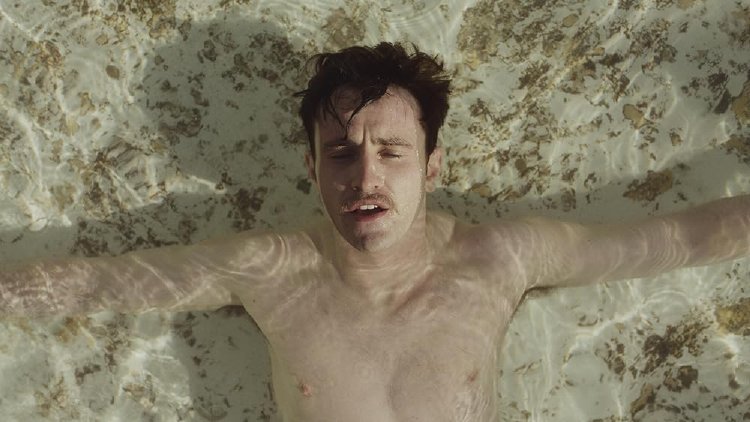
In 1917, Kentuckian Lionel (Paul Mescal), whose music teacher guided him into a scholarship at the Boston Music Conservatory, hears a song from home being sung and introduces himself to David (Josh O'Connor), the man playing it at the piano. David, a composition major, tells him he knows of the tune because of his fascination for American folk music, songs he takes great pains to collect in "The History of Sound."
Laura's Review: B+
When "The History of Sound" premiered at Cannes earlier this year, Paul Mescal called comparisons to this film and "Brokeback Mountain" 'lazy and frustrating,' stating this film's approach to queer love was 'celebratory,' but the parallels between the two films are obvious, and, in fact, this one suggests something even darker. That is not to say that "The History of Sound" is an overt copy of the earlier film, merely that comparisons are inevitable given their frequent parallel narrative beats.
Unlike "Brokeback Mountain," I would have sworn this was based on a true story, for example, so artful is Ben Shattuck's adaptation of two of his own short stories, giving us a rich history of not only American folk, but the wax cylinder recording device that would have been used to catalog them. This part of the story becomes the film's midsection, after a love affair initiated in Boston is cut short by WWI, which David, an orphan with no family, enlists for while Lionel returns to the family farm, a separation of many years joined by the filmmaker with his leads harmonizing in song over a montage of Lionel working the farm.
While Lionel's mother (Molly Price, TV's 'Elsbeth') notes his sadness, his father (Raphael Sbarge) brightens his evening by showing him a trick by forming tubes of paper then dropping a match into the center, causing the paper to burn and then lift into the air. But Lionel's spirits will be most lifted when he finally receives a letter from David, one which directs him to join him at a train station to journey into rural Maine on a folk song collecting expedition.
This lovely interlude will find the two hiking through woods and visiting with folk they convince to sing into a metal receiver which carries sound waves to a needle whose vibrations write them onto a wax cylinder. Of course the two men resume their love affair and their conversations are revealing, David illustrating to Lionel Dale Carnegie methods of getting cooperation ('it's kind to make it easier for people') while also discussing their feelings about their own unconventional (for the time) relationship (when Lionel expresses no discomfort with 'what they're doing,' David expresses admiration for him, suggesting he feels otherwise). Then the research trip comes to an end and David evades every suggestion Lionel makes for remaining together, instead urging him to travel the world and make money off his talent. Years and years will go by, all of Lionel's letters unanswered, an affair with a male musician in Rome and attempt at a 'normal' life with Clarissa (Emma Canning) in England brutally cut off by the heartsick man. Lionel will eventually return to Maine in search of David where he will be referred to someone he had no knowledge of.
Mescal plays the simpler, more open of the two characters, O'Connor, the more academic, hiding behind a sly smile. Both do their own singing in the film, but although Mescal has a nice voice, it is a bit of a stretch to attribute the extraordinary quality to it which the film does. The two have a natural, easy companionship, O'Connor keeping aspects of his character, like his experiences during the war, hidden.
Director Oliver Hermanus ("Moffie," "Living") has created both a beautiful period romance and ode to Americana, which cinematographer Alexander Dynan paints in muted colors like a sepia photograph, one shot of the two men in the woods made more fanciful when seen through a natural 'screen' of scrolled foliage. As the film's title would suggest, sound, too, is integral here, from the faint scratching of old recordings to the ambient noise of old, wooden rooms. Production design and art direction transport us into the mid teens through the late 1920's on either side of the pond and in both rural and urban settings. Oliver Coates' score employs a mournful violent, Hermanus reorienting us in 1980 with Joy Division's 'Atmosphere,' which finds Lionel, now played by Chris Cooper, receiving an unexpected package which transports him to the past.
Robin's Review: B
Lionel (Paul Mescal) and David (Josh O’Connor) met at college and both have a passion for music – and each other. David returns from the horrors of the Great War and the two travel through rural Maine collecting folk songs, for Bowdoin College, in “The History of Sound.”
Unfortunately, for me, director Oliver Hermanus and scribe Ben Shattuck, adapting from the first and last short stories in his collection, The History of Sound, give us two separate films, neither of which really satisfies.
One path taken is the romantic relationship between Lionel and David that some may compare to “Brokeback Mountain (2005).” (I do not.) The other, the one I prefer be explored, is the folk music of America, here Kentucky and Maine. This is where the story excels – with music and song.
Their story begins in 1917 when the two men meet while studying at the New England Conservatory of Music, where they become fast friends – and more. Then, the United States declares war on Germany and David is drafted and shipped overseas. Lionel returns to the poverty of his family in rural Kentucky and works on the farm – until his father dies and his mother loses touch with reality.
Lionel and David, after the latter’s return, set off on foot in rural Maine with their Edison recording machine and a case full of wax disks for collecting music. They stop along the way, when they hear any folk music, and David charms the players into allowing them to record the songs. They build up a sizable collection. This is where, when they make their stops and record the songs, “The History of Sound” works best. I wanted more of the music and less of the romance.
There is a convincing chemistry between Lionel and David, two very different individuals from even more different backgrounds. As their common passion, music, bounds them together, their differences fade and their bond grows. Then, the story takes a different turn and their fortunes reverse.
This turn of character is abrupt and barely touches upon the effects of PTSD that David suffers – “shell shock” is mentioned once – and will affect him mortally. All in all, there is lost opportunity in making a focused story about music in America – what we do get is great folk music from the heart and soul. The romantic story overshadowed the music, which is too bad.
There is an element of deceit as the story progresses and things we believe are not real as David’s life is bound by lies. This evoked a prominent “Huh?” from me as things wrap up. I would prefer that the music be given more prominence as the folk music they record is often beautiful and haunting.
Mubi releases "The History of Sound" in NY on 9/12/25, wider on 9/19/25.

