Videoheaven
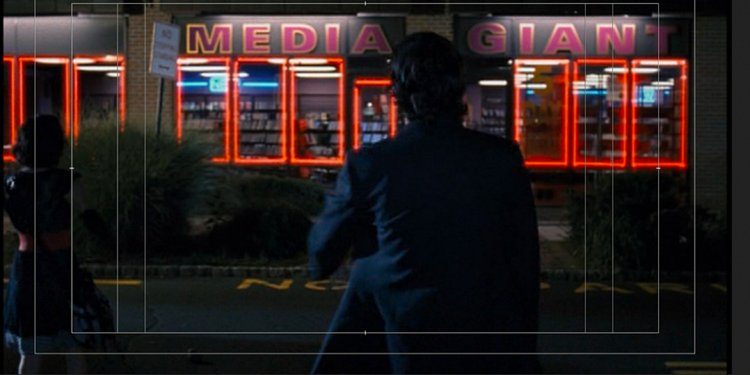
Inspired by Daniel Herbert's 'Videoland Movie Culture at the American Video Store,' then focused when the author sent him a chapter cut from the book about video stores in movies, Alex Ross Perry ("Her Smell," "Pavements") delves into the phenomenon of the video age and just how filmmakers engaged with it in his second documentary of the year, "Videoheaven."
Laura's Review: B
Perry also goes meta, casting 'Stranger Things'' video store clerk Maya Hawke as his narrator, her first commentary over a clip of her father, Ethan, as he wanders through a video store delivering the 'To be or not to be' soliloquy from Michael Almereyda's "Hamlet." But Perry hasn't just dazzled with stunt casting as Hawke remains cool and collected as she tackles an enormous amount of information at quite a clip, her delivery always engaged with the material. Over the course of just under three hours, Perry examines the rise of the commercial videotape, the differences between independent video stores and large commercial chains like Blockbuster and how both television and movies incorporated the home-viewing culture.
Of course, like television before it, the rise of home video kicked off another series of 'death of the movie theater' prognoses, but 20th Century Fox released some major titles beginning in 1978 via Magnetic video, giving new life to older titles. At the time, these videotapes were expensive and as the market grew, the video rental store emerged. Perry notes that their environments were often somewhat sinister and mysterious and by 1983 the videotape was made controversial in David Cronenberg's "Videodrome" when it was used to distribute snuff films. And, of course, the porn industry grew rapidly with home video, giving rise to the video store 'adult section' often denoted as the 'back room.' In 1984, Brian DePalma became the first to feature a video store within a movie in "Body Double," a film set within the porn industry.
And yet, Ross Perry also shows how the video store became a staple of the romantic comedy, a place where strangers could connect by exposing their preferences in films. The video store clerk also became a frequent character in movies, first depicted as nerdy types, then evolving into often arrogant arbiters of taste (famous examples in real life include Quentin Tarantino and Kevin Smith, whose first film, "Clerks," famously featured video rentals). Then things took another turn with the arrival of Blockbuster, all brightly lit and family friendly (unless it's located in 'South Park,' but that episode focused on a bad business decision by Randy Marsh, something Perry features discussing the industry's decline). The distinctions between these big chains and the independents were many - customers would no longer be frustrated finding the new release they'd wanted had already been checked out, yet the smaller stores specialized in rarer titles, the cult and foreign films a Blockbuster might not carry. Processes and rules, like rewinding and late fees, began to change. What remained a staple was how movie studios used these spaces to hype their own product, movie one sheets in a rental store advertising other titles within a studio's film.
One of the pleasures of the documentary are the plethora of film clips featuring astonishingly young versions of actors still around today, people like Ben Affleck, Chris Pine and Reese Witherspoon (the latter two starred in "This Means War," a 2012 romcom which still featured a video store scene well after their decline had set in). In addition to 'South Park,' we'll see the stars of 'Seinfeld,' 'Mad About You,' 'Friends,' 'Frasier' and 'Thirtysomething all discuss which movie they want to rent.
Netflix would change the game again with the advent of the DVD, its early mail system an early death knell for those trips to the rental store. (While 'Laserdiscs' is seen prominently in one video store window, the format isn't even mentioned during the film's 173 minute running time as the niche format's specialty stores were never featured in a movie.) As Perry concludes with the phenomenon's dying days, he shows us Will Smith's 2006 film "I Am Legend," prominently featuring Greenwhich Village Video, which no longer existed by the time of the movie's 2012 setting. As Maya Hawke notes, now any film featuring one of these 'video heavens' is a period piece.
With that running time, Perry obviously goes into a whole lot more, but the film does begin to get repetitious as well, Hawke repeating themes which have already been mentioned. Still, "Videoheaven" is a hell of a nostalgia trip which gives the viewer a lot to chew on.
Robin's Review: B
In 1976, JVC introduced the Video Home System (VHS) to the world and, by the 1980s, it dominated the movie viewing market. Documentarian Alex Ross Perry, with Maya Hawke narrating, assembles a mass of archival footage of the rise and fall of the video store in “Videoheaven.”
The film begins with Ethan Hawke, quoting Shakespeare, walking through a video store. Things shift to his daughter’s narrative of the history of the VHS format from its introduction to the first video rentals a year later and on to its dominance in the home entertainment field. That field was owned, primarily, by the big brick and mortar chains, like Blockbuster Video and Hollywood Video. But, also remember the little mom and pop video stores that popped up everywhere over those years.
A sizable portion of “Videoheaven” is showing how video stores appeared in many movies of the time, showing the social impact VHS and video stores had on the world through the movies they also appeared in as subjects.
At 2 hours and 53 minutes, Alex Ross Perry’s latest work is, in a word, long. As the film approached the two hour mark, I noticed it started repeating itself. It makes the point that VHS, and the video stores it spawned, was a decades-lasting cultural icon that quickly fell by the wayside when newer and better format prevailed and VHS died. It is repeated a number of times in different ways.
We still have hundreds and hundreds of VHS tapes with recorded movies stacked in our basement. We will never watch them again since DVD, Blu-ray and 4K are all much better – and, you do not have to rewind.
Cinema Conservancy debuted "Videoheaven" on 6/10/25 at the Tribeca Film Festival. It will play in Cambridge, MA at the Brattle Theater on 8/17/25.

