The Smashing Machine
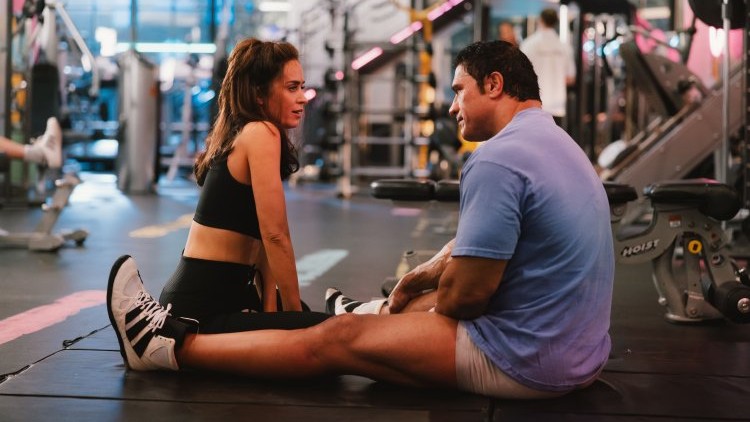
UFC Hall of Fame fighter Mark Kerr (WWE's Dwayne 'the Rock' Johnson) was a mild mannered man outside of the ring except for his volatile relationship with the woman he loved and who loved him, Dawn Staples (Emily Blunt). Inside of the ring, all his anger was unleashed, earning him the moniker of "The Smashing Machine."
Laura's Review: B+
First it was the Cohen and Duplass Brothers. Now the Safdie brothers ("Good Times," "Uncut Gems") have split to direct their own competing awards contenders with writer/director/producer/editor Benny Safdie's the first to hit theaters (Josh Safdie's "Marty Supreme" arrives at Christmas). Although Kerr didn't retire from fighting until 2009, the filmmaker concentrates on his starring role in the controversial early days of the UFC, 1997-2000, when the sport was relegated to half empty arenas in the U.S. but embraced in Japan with their Pride Fighting Championships. The film ends shortly before Kerr marries Staples as well (we'll learn in pre-closing credits the couple had a son, but divorced after fifteen years).
The film quickly establishes Kerr's abilities with the 1997 World Vale Tudo Championship against Paul Varelans (Andre Tricoteux), who was a half a foot taller and heavier than Kerr but who was quickly dispatched by him, cinematographer Maceo Bishop ("Somewhere in Queens") capturing the brutal pounding as if from a ringside seat. Oscar winning makeup prosthetic designer Kazu Hiro ("Norbit," "Darkest Hour") and Johnson himself amaze us with his transformation, Hiro giving him a heavier brow, deeper set eyes, cauliflower ears and a tightly curled wig, Johnson having bulked up and defined his already imposing form (which was also enhanced by Hiro).
Safdie sneaks some exposition in at a doctor's waiting room, Kerr speaking to an older woman who's been glancing his way, explaining that the UFC, which she's heard is 'bloody,' is a competition of various martial arts, from wrestling to karate, to determine which is best, while also highlighting the man's increasingly worrisome addiction to pain killers.
During a trip to Tokyo, we'll see Kerr's appreciation of beauty and art as he purchases an expensive porcelain bowl and a colorful silk scarf for Dawn. A press conference illustrates the beginning of the sport's definition, certain moves identified as illegal. Dawn will arrive right before Mark's fight with Igor Vovchanchyn (Olympic boxing heavyweight champion Oleksandr Usyk) and manage to push his buttons in all the wrong ways, demanding attention for having flown so far to be with him right when he needs to focus, then realizing she's gone too far, backing down and finding her seat. Mark Kerr, who's told Japanese press he doesn't know how to answer questions about losing because he never has loses his first fight. Then he does, but pushes back, claiming Igor used illegal knee strikes to his head, winning a 'No Contest' ruling, but suffering a blow to his reputation. And yet he graciously arranges for a group photo with Igor afterwards, asking a tearful Dawn to snap the pic. Dawn will tell his best friend and fellow fighter Mark Coleman (mixed martial artist Ryan Bader) that Kerr 'wasn't serious' before the fight, having been drinking, but as we haven't witnessed this behavior it feels petty. But Dawn will accompany Mark on a quest for pain killers in Tokyo, encouraging him to accept the proffered Advil, and her next call to Coleman back in the States will be panicked, having found Mark unresponsive on the floor.
Safdie, who directs with the same caffeinated, if slightly less hyper-active style as "Uncut Gems," gives us a three-way perspective on Kerr - the man who cherishes his friends and beauty, the rage-fueled addict and the man who got high on fan adulation and winning, the latter concept frequently igniting knock-down drag-outs between him and Dawn. You will forget you are watching Dwayne 'the Rock' Johnson, so completely does he settle into Kerr's skin. Blunt, a friend and former co-star, also stretches here, her Dawn loving her man but trying not to get lost in his shadow. Their fights after Kerr's successful stint in rehab are particularly psychologically illuminating (and well written by Safdie), his newfound independence unmooring her, her partying undermining him. And then there is the big competition in 2000, the one which threatens to pit Kerr against Coleman. When Dawn learns his friends have been lobbying him to keep her from traveling to Tokyo, she goes off the deep end and Safdie intercuts Kerr's final fight with flashes of their life together, putting us into his mindset.
Safdie's stuffed the film with actual fighters in roles large and small, Bader and mixed martial artist Bas Rutten ("Here Comes the Boom") as Kerr's coach Bas both noteworthy and completely natural. Costume designer Heidi Bivens ("Spring Breakers") outfits Dawn in tie-back halters and cut-outs, Kerr more stylish than the average fighter, befitting his personality. Nala Sinephro's score varies from jazzy brass to more romantic French horns befitting the changing tones of the film. "The Smashing Machine" doesn't attempt to fill us in on the ins and outs of UFC fighting, instead giving us an almost impressionistic portrait of one of its early stars. The film is one of peaks and valleys rather than a more traditional arc, ending with the real Mark Kerr as an Everyman, grocery shopping in the current day.
A24 releases "The Smashing Machine" in theaters on 10/3/25.

