Boorman and the Devil
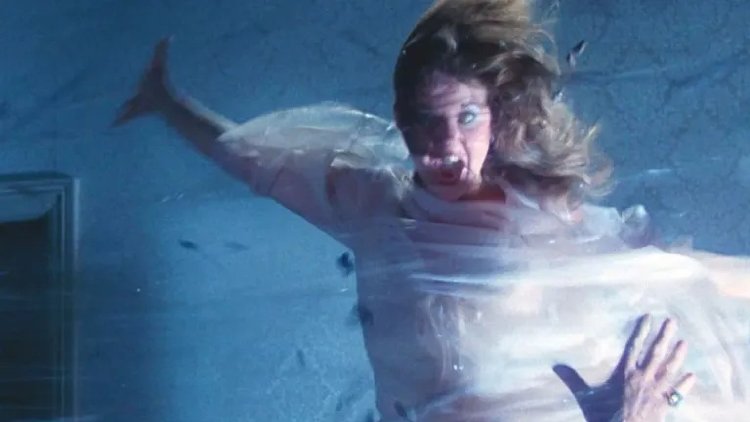
John Boorman was riding high after having directed "Point Blank" and "Deliverance," but his career was almost entirely derailed when he agreed to direct a sequel to "The Exorcist," a film he didn't enjoy which he hoped to respond to with an entirely new concept, one he thought hopeful. But a series of events would take the film, which many believe literally cursed, in different directions. 1977 became a showdown between "Boorman and the Devil."
Laura's Review: A-
Documentaries about the making of a film have become their own subgenre, from Les Blank's "Burden of Dreams" and "Hearts of Darkness: A filmmaker's Apocalypse," which document the extreme difficulties Herzog and Coppola faced making films which were utlimately successful, to "Jodorowsky's Dune" and "Lost in La Mancha," which reveal unsuccessful attempts by Jodorowsky and Terry Gilliam in bringing their vision to life (Gilliam eventually did make "The Man Who Killed Don Quixote" in 2018). Writer/director David Kittredge does something a little different, examining how a successful filmmaker ended up making a movie which flopped and which Boorman says almost ruined his life. It's essential viewing for cinephiles.
After a title card kicks off the film with the Hanif Kureishi quote 'The artist must live on the edge of failure. There can be no omniscience; any work could be a triumph, disaster or a bit of both,' Kittredge lays the groundwork for the risk-taking filmmaking of the 1970's with commentary from film critics Bilge Ebiri and Stephanie Zacharek, then digs into Boorman's career up to 1977, interviewing the 85 year-old filmmaker (now 93) at his Irish County Wickam estate. There are several great anecdotes here, including how Boorman ignored studio notes about 'a bunch of guys in green suits' in "Point Blank" and was proven correct and how the last shot of "Deliverance" influenced the last shots in several later films, most famously "Carrie." We also learn that Boorman was offered the original "Exorcist" but turned it down because he felt it was about 'the torture of a child.' He admired the craft of Friedkin's subsequent film but didn't find it an enjoyable experience. It was a cultural phenomenon nonetheless.
Suddenly, prestigious films like "The Godfather" and "The French Connection" were getting sequels greenlit and they were successful, both artistically and financially, so "The Exorcist" following suit was a no brainer. But both Friedkin and the book's author, William Peter Blatty, were in the process of suing Warner Brothers for their share of the profits and Ellen Burstyn said she wanted nothing to do with it. Linda Blair demanded $1 million and 'something different' and when Boorman was given the opportunity to direct the sequel, he turned in a script that delighted her, something he called 'metaphysical,' referencing French philosopher Pierre Teilhard de Chardin, who believe in a universal evolution toward a spiritual unity. There was one major problem from the outset, though - this was not at all what fans of the original films were expecting and although Boorman wanted to title the film "The Heretic," Warner Brothers insisted on adding "The Exorcist II."
Then everything went into a downward slide. Boorman had originally wanted John Voight, whose religious beliefs aligned with his vision, to star, but once again Warner Brothers stepped in, wanted a more established star. They chose Richard Burton, whose style of acting may have worked in the 1960s but hadn't evolved for this new wave of filmmaking. Then Lee J. Cobb died unexpectedly, throwing Lt. Kinderman's thread of the script out of whack. Boorman pressed on, hiring the up-and-coming Louise Fletcher to play Regan's psychiatrist which was a very good thing for this documentary as she turns out to be its most hilarious interview subject, unafraid of saying anything and saying it with humorous high spirits. She'll begin by outing Burton as having purposefully ducked Boorman's read throughs.
The film was full of technical innovation and challenges, like lighting the strobing effect of the film's synchronizer machine. Boorman brought back the ghost glass, an in-camera optical effect with he also combined with others while shooting on a rotating stage(!). An entomologist was hired to figure out how to shoot swarming locusts (the recent college grad tended to 3,000 of them, each kept in a glass vial). Then Boorman, who had had a particular color of earth imported to blow around the soundstage, developed Valley Fever from exposure to it, becoming seriously ill and hospitalized. The production shut down for five weeks and because Burton had an upcoming theater commitment, rewrites began to simplify things, including a changed ending, and writer Rospo Pallenberg was not popular on set. More and more disasters ensued. Safety issues included the production having Blair walk off the edge of a building roof 33 flights up without any rigging and only a small net to catch her and setting actress Rose Portillo on fire who was then only saved when someone noticed her panicked expression. Two major players had serious heart issues and the film's editor quit with no notice. Louise Fletcher, who frequently invokes Pazuzu in reference to this shoot, ended up in the hospital after her last day on set.
Then the film came out. At a Pasadena test screening, Warner Brothers executives were identified and chased down the street by the film's audience. Theaters had happily agreed to run the film for a minimum of 12 weeks with very low profit margins, their resulting financial calamity resulting in blind bidding being outlawed two years later. Boorman's attitude about the film sometimes seems contradictory, criticizing Burton as not being able to act 'below the neck' but standing up for Linda Blair, whose performance was critically drubbed (the actress adds little of value to the documentary, largely expressing her enthusiasm for working with Richard Burton while making us question her enthusiasm for the original script). He insists his film was not a sequel but a 'riposte,' but acknowledges he should have known audience expectations would differ. He also recut the film, removing the seven minutes that elicited laughter during the film's ending, leading to a quip that now it was no longer funny but merely strange. By the time it came out in Europe, 125 changes had been made and the film was 16 minutes shorter. Nothing helped, but Boorman eventually did rebound in 1981 with "Excalibur" and later smaller films like "Hope and Glory" and "The General."
Besides interviews and an extensive use of film clips, Kittredge sprinkles in little artistic flourishes, like an animated locust crossing over a script page. He wraps by featuring filmmakers Karyn Kusama and Mike Flanagan, who took the new "Exorcist" trilogy reins from David Gordon Green after his "The Exorcist: Believer" bombed, along with Ebiri and Zacharek, to offer perspectives on a film some consider a misunderstood masterpiece while others think it one of the worst movies ever made. No matter where you stand, though, "Boorman and the Devil" is a fascinating account of the making of an ill-fated film, even if its documenter appears to lean on the side of apologist. ("The Exorcist III," on the other hand, written and directed by William Peter Blatty, is far better than its reputation, a genuinely creepy follow-up.)
Robin's Review: A-
John Boorman, in the 1960s and early 70s created a couple of landmark films, including "Deliverance (1972)." Then, he gets the chance to direct the sequel to a film he once turned down. The offer is too good and he takes on "Exorcist II: The Heretic (1977)" and almost ruins his career in "Boorman and the Devil."
For us movie nuts out here, director-writer David Kittredge gives a fascinating study of a filmmaker and his involvement in what is one of the movie industry's biggest disasters and on many levels.
John Boorman is front and center in this story where, prior to "Heretic," he was nominated for three Oscars for "Deliverance." When looking for someone to helm the big-budget sequel to one of the greatest horror movies, ever, Warner Bros offered Boorman a ton of cash. It was an offer he could not refuse.
Kittredge follows Boorman's early career with glimpses of his films before the sequel debacle, including a couple really good ones. The meat of "Boorman" is on "The Exorcist: The Heretic" and it describe all of the trials and tribulations in making the film – like huge budget overruns, constant script rewrites and, most famously, Richard Burton's behavior on set.
Mixed in with it are the many talking heads interviews with those involved in making the disaster – Boorman himself, Linda Blair, Louise Fletcher, scripters William Goodhart and Rospo Pallenberg plus more of the cast and crew and participants.
More fun and intriguing are all of the films, not just Boorman's, whose many clips are scattered throughout the movie. We also learn that, like Michael Cimino's "Heaven's Gate (1980)," "Heretic" also had a budget out of control and a box office take that was a disaster. The history of the distribution aftermath is a story unto itself of cuts, recuts, reassembly and more attempts to make money off of a disaster.
The telling of the story of the making "The Exorcist II: The Heretic," and the debacle it was for John Boorman, is far more interesting than "E II." It is one of the best documentaries out this year.
Yellow Veil released "Boorman and the Devil" in NYC on 8/28/26, expanding in subsequent weeks.

